
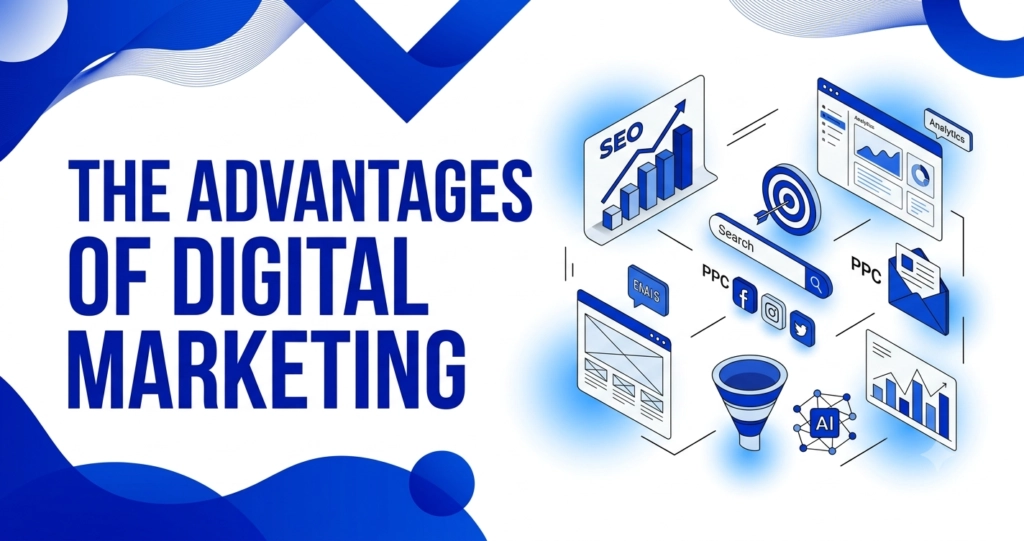
The way businesses promote their products and services has changed significantly with the growth of the internet. Today, customers use Google, social media platforms, websites and online reviews to discover brands and make purchasing decisions. This has created new opportunities for businesses to connect with their target audiences and grow beyond traditional marketing methods.
For business owners, startups and entrepreneurs, digital marketing offers an effective way to build brand awareness, attract potential customers and increase sales. Unlike traditional advertising, it provides opportunities to reach specific audiences, monitor campaign performance and improve marketing strategies using real data. This guide explains the major advantages of digital marketing, how it helps businesses grow and why it has become an important part of modern business strategies.
Definition of Digital Marketing
Digital marketing refers to promoting products, services and brands through online platforms and digital technologies. It helps businesses connect with potential customers using search engines, social media, websites, email and online advertising.
Unlike traditional marketing methods such as newspaper advertisements, television commercials and printed promotions, digital marketing allows businesses to target specific audiences and measure their marketing performance.
Some important areas of digital marketing include:
- Search Engine Optimization (SEO): Improving website visibility on search engines like Google to attract organic traffic.
- Social Media Marketing (SMM): Promoting brands and engaging with customers through platforms such as Instagram, Facebook and LinkedIn.
- Search Engine Marketing (SEM): Using paid search advertisements to reach people actively searching for products or services.
- Content Marketing: Creating useful blogs, videos, graphics and other content to educate audiences and build brand awareness.
- Email Marketing: Sending targeted emails to communicate with customers and promote products or services.
- Performance Marketing: Running measurable advertising campaigns focused on generating leads, sales and conversions.
These strategies help businesses create a strong online presence and reach customers throughout their purchasing journey.
What Are the Major Advantages of Digital Marketing?
Digital marketing offers several advantages that help businesses improve their visibility, connect with customers and achieve their marketing objectives.
Here are some important benefits:
- Global audience reach: Businesses can connect with potential customers beyond their local geographical areas.
- Cost-effective promotion: Companies can start campaigns with flexible budgets according to their marketing requirements.
- Targeted advertising: Businesses can reach specific audiences based on location, interests, demographics and online behaviour.
- Measurable performance: Marketing tools provide useful data about website traffic, clicks, leads and conversions.
- Better customer engagement: Social media and email platforms make communication with customers easier.
- Increased brand awareness: Consistent online marketing helps more people discover and recognize a business.
- Higher conversion opportunities: Relevant marketing campaigns can attract interested visitors and encourage them to take action.
These advantages make digital marketing an important investment for businesses looking to improve their market position and achieve sustainable growth.
How Does Digital Marketing Help Businesses Reach a Wider Audience?
One of the biggest advantages of digital marketing is its ability to connect businesses with audiences beyond their immediate geographical locations.
Traditional advertising often depends on physical locations and broad promotional campaigns. Digital marketing allows businesses to reach potential customers across different cities, states and countries through online platforms.
Hypothetical example: A small clothing business in Kerala wants to expand its customer base.
- Before: The business depends mainly on local customers, walk-in purchases and word-of-mouth recommendations.
- After: It creates an e-commerce website, promotes products through Instagram, optimizes product pages for Google and runs targeted Meta Ads.
This approach allows the business to showcase its products to a wider audience and receive orders from different locations.
Digital marketing makes business expansion more accessible, although actual reach and sales depend on factors such as competition, budget, product demand and marketing strategy.
Why Is Digital Marketing More Cost-Effective Than Traditional Marketing?
Marketing budgets are important for every business, especially startups and small companies. Traditional advertising methods such as television commercials, newspaper advertisements and billboards can require significant investment.
Digital marketing offers more flexible promotional opportunities, allowing businesses to choose platforms and budgets according to their requirements.
Some important advantages include:
- Flexible budgets: Businesses can start advertising with smaller budgets and increase spending based on performance.
- Controlled spending: Advertising platforms allow marketers to manage campaign budgets and bidding strategies.
- Audience targeting: Businesses can focus their spending on relevant audiences rather than reaching everyone.
- Performance measurement: Campaign reports help identify which advertisements generate meaningful results.
- Campaign optimization: Marketers can adjust targeting, creatives and landing pages to improve performance.
For example, a local restaurant can run location-based social media advertisements to reach people in nearby areas instead of spending money on advertisements targeting an entire state.
However, digital marketing is not automatically cheaper in every situation. Its cost-effectiveness depends on campaign execution, competition and the value generated from each customer.
How Does Digital Marketing Improve Brand Awareness?
Brand awareness refers to how familiar people are with a business, its products and its services.
Customers are more likely to consider brands they recognize and trust. Digital marketing helps businesses maintain visibility across different online platforms and create consistent brand experiences.
Some effective ways to increase brand awareness include:
- Social media content: Sharing informative posts, videos and product updates regularly.
- SEO: Improving search visibility so potential customers can discover the business through Google.
- Content marketing: Publishing useful blogs and educational resources related to the business industry.
- Influencer marketing: Collaborating with relevant content creators to introduce products to their audiences.
- Paid advertising: Using targeted campaigns to increase brand exposure among potential customers.
Consistent branding, useful content and meaningful customer interactions help businesses develop recognition and credibility over time.
How Does Digital Marketing Help Generate Quality Leads?
Lead generation is one of the most important objectives of digital marketing. A lead is a person or business that shows interest in a product or service by taking an action such as submitting an enquiry form, requesting a quotation or contacting a company.
Digital marketing helps businesses attract potential customers through different channels.
For example:
- SEO: Attracts people searching for relevant products and services.
- Google Ads: Reaches users who are actively searching for specific solutions.
- Social media marketing: Introduces businesses to potential customers through relevant content.
- Meta Ads: Helps businesses generate enquiries through lead forms, messages and website conversions.
- Email marketing: Nurtures interested audiences with relevant information and offers.
Hypothetical example: A web development company wants to attract more business enquiries.
- Before: The company depends mainly on referrals and occasional social media posts.
- After: It creates service-specific landing pages, publishes SEO-friendly blogs, runs Google Ads and uses enquiry forms to capture potential customers.
This creates multiple opportunities to attract people who are actively looking for website development services.
The quality of leads still depends on targeting, messaging, offers and the business’s ability to convert enquiries into customers.
Why Is Digital Marketing Important for Customer Engagement?
Customer engagement refers to the interactions between a business and its audience. Building strong relationships with customers is important for improving brand trust and encouraging repeat purchases.
Digital marketing provides several channels for businesses to communicate directly with their customers.
Here are some important benefits:
1. Direct Communication
Social media comments, direct messages and email allow businesses to respond to customer questions and feedback.
2. Faster Customer Support
Online communication channels make it easier for businesses to provide updates and address customer concerns.
3. Personalized Communication
Businesses can share relevant messages, recommendations and offers based on customer interests and previous interactions.
4. Customer Feedback
Online reviews, comments and surveys help businesses understand customer expectations and identify areas for improvement.
5. Stronger Customer Relationships
Consistent communication and useful content help businesses maintain relationships beyond the initial purchase.
Successful customer engagement is not just about receiving likes or comments. It is about building trust and creating positive customer experiences.
How Does Digital Marketing Provide Measurable Results?
One of the biggest advantages of digital marketing is the ability to track campaign performance using analytics tools.
Traditional marketing can sometimes make it difficult to identify exactly how many customers responded to a particular advertisement. Digital marketing provides more detailed performance data that helps businesses evaluate their strategies.
Some useful metrics include:
- Website traffic: Measures the number of visitors reaching your website.
- Click-Through Rate (CTR): Shows the percentage of people who click an advertisement or search result after seeing it.
- Conversion Rate: Measures the percentage of visitors who complete a desired action.
- Cost Per Lead (CPL): Measures how much it costs to generate a potential customer.
- Customer Acquisition Cost (CAC): Measures the overall cost of acquiring a new customer.
- Return on Ad Spend (ROAS): Measures the revenue generated for each unit of advertising spend.
For example, a business may receive 1,000 website visitors through an advertising campaign but generate only five enquiries. By reviewing its landing page, advertisement and audience targeting, the business can identify opportunities to improve conversions.
Measuring the right metrics helps businesses make informed decisions instead of relying only on assumptions.
The Role of AI in Improving Digital Marketing
Artificial Intelligence is creating new opportunities for businesses and marketers to improve their digital marketing activities.
AI-powered tools can help analyze customer behaviour, generate content ideas, support advertising optimization and automate repetitive marketing tasks.
Some important applications include:
- Content creation: Generating blog ideas, social media captions and content outlines.
- Keyword research: Identifying relevant search terms and discovering content opportunities.
- Customer analysis: Understanding audience behaviour and identifying customer preferences.
- Advertising optimization: Supporting campaign analysis and creative testing.
- Personalized marketing: Helping businesses deliver more relevant messages to different audience segments.
- Marketing automation: Managing repetitive activities such as email workflows and customer follow-ups.
However, AI should support human creativity and strategic thinking rather than replace them. Marketers still need to understand customer psychology, verify information and develop strategies that match business objectives.
Combining AI tools with digital marketing expertise can help businesses improve efficiency and make better marketing decisions.
How to Get the Best Results from Digital Marketing
Although digital marketing offers several advantages, businesses need a proper strategy to achieve meaningful results. Simply creating social media accounts or running advertisements does not guarantee business growth.
Follow these practical steps:
- Define your marketing goals. Decide whether you want to increase brand awareness, generate leads, improve sales or attract website traffic.
- Understand your target audience. Identify customer needs, interests, problems and purchasing behaviour.
- Build a professional website. Create a user-friendly website with clear service information, relevant content and strong calls to action.
- Invest in SEO. Optimize your website to improve organic visibility and attract relevant search traffic.
- Create valuable content. Publish useful blogs, videos and social media posts that answer customer questions.
- Use paid advertising strategically. Run targeted Google Ads and Meta Ads campaigns to reach potential customers.
- Build customer relationships. Use email marketing and social media engagement to maintain communication.
- Monitor campaign performance. Analyze results and improve your marketing activities based on reliable data.
The best approach is to select strategies that match your audience, industry and business goals rather than trying to use every digital marketing platform.
Frequently Asked Questions
What are the main advantages of digital marketing?
The main advantages include wider audience reach, cost-effective promotion, targeted advertising, measurable results, better customer engagement, increased brand awareness and more opportunities to generate leads and sales.
Is digital marketing suitable for small businesses?
Yes. Digital marketing allows small businesses to promote their products and services with flexible budgets. Strategies such as local SEO, social media marketing and targeted advertising can help them compete with larger businesses.
How does digital marketing increase sales?
Digital marketing helps businesses attract relevant audiences, showcase their products, build customer trust and guide potential customers towards purchasing decisions. Effective campaigns can improve enquiries and sales when supported by suitable products, offers and conversion strategies.
Is digital marketing better than traditional marketing?
Both approaches have their advantages. Digital marketing offers audience targeting, performance tracking and flexible budgets, while traditional marketing can provide strong local visibility and broad exposure. The right choice depends on the target audience and business objectives.
How long does it take to see results from digital marketing?
The timeline depends on the strategy. Paid advertising can generate traffic and enquiries relatively quickly, while SEO and content marketing generally require more time and consistent effort to build long-term visibility.
Can digital marketing help businesses reach international customers?
Yes. Websites, search engines, social media and online advertising allow businesses to reach audiences in different countries. However, international growth also requires suitable pricing, delivery options, localization and market research.
Conclusion
Digital marketing has become an important part of modern business because it provides opportunities to reach more customers, improve brand visibility and generate measurable results. From SEO and social media marketing to paid advertising, content creation and email marketing, businesses can use different strategies to attract audiences and build stronger customer relationships.
Its biggest advantage is the ability to connect marketing activities with measurable business objectives. Businesses can understand customer behaviour, identify successful campaigns and improve their strategies based on actual performance.
However, achieving success requires more than simply being active online. A clear marketing strategy, valuable content, proper audience targeting and continuous optimization are essential for sustainable growth.
Instead of focusing only on likes, followers or website traffic, businesses should concentrate on attracting the right customers and converting their interest into meaningful results.
Digital marketing is not just about promoting a business online; it is about creating opportunities, building customer relationships and turning digital visibility into long-term business growth.